Okay, so check this out—I’ve been poking around Solana NFT trails for years now. Wow! The first time I tried to trace a dusty mint back to its origin I felt like a detective. My instinct said there had to be a better view than the raw on-chain data, and I kept finding gaps in my workflow. Initially I thought a single tool could solve everything, but then realized that context and filtering matter a lot when you’re tracking provenance and wash trading.
Whoa! I mean, really—NFTs on Solana move fast. Seriously? One block can change ownership three or four times. Here’s the thing. If you don’t have clear transaction grouping, you miss patterns that scream “bot activity” or “wash trading.” My gut felt something was off about some popular drops, and deep dives confirmed somethin’ was sketchy.
Here’s a quick scene: I was in my Bay Area apartment, coffee cooling, eyes on the screen. Wow! A wallet had flipped dozens of mints within minutes. It looked legit at first glance. But then the timestamps, lamport flows, and SPL token transfers lined up oddly, like a choreography that didn’t make sense unless someone scripted it.
Hmm… I started to draw timelines. Wow! Those timelines revealed the same few validators reappearing, and many tiny transfers back and forth. On one hand the marketplace listings made the collection look organic. On the other hand the block-level activity told a different story—sudden spikes, repeated wallet reuse, and little-to-no secondary market depth.
I’ll be honest: this part bugs me. Wow! Because retail buyers often can’t see chain-level nuance. I spent nights building quick filters so I could sort by program id, by amount, by memo content. Actually, wait—let me rephrase that: I iterated filters until the noise dropped and the real signals remained. The result was that some projects I liked looked a lot less healthy, though I still root for creators.
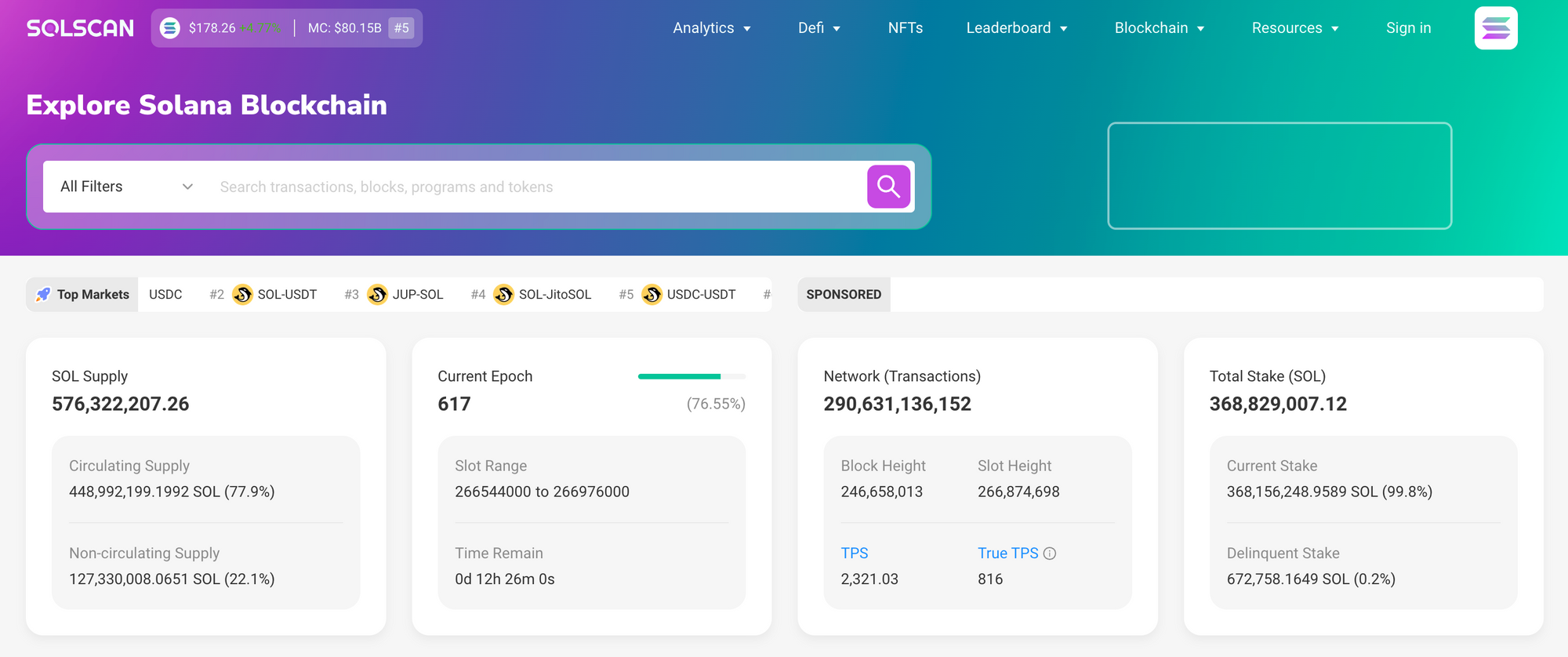
Why solscan explorer became my daily tool
Wow! First, the UI gives me the things I need without making me dig through raw RPC responses. I like tools that respect attention—simple search, token pages, and clean transaction breakdowns that show each instruction in a human-friendly way. On top of that, the way it surfaces program IDs and SPL token flows helps me spot repeating patterns across wallets. Honestly, I use solscan explorer as my quick triage: if something flags there, I go deeper with custom scripts. My approach is pragmatic—use the explorer for pattern recognition, then export or query RPC for heavy lifting when needed.
Something felt off about an opensea-style collection a while back. Wow! I traced a handful of mints back to a single staging wallet. Initially I thought it was a philanthropic founder minting for community members, but the memo fields and downstream transfers told another story. On the one hand, memos can be meaningless; on the other, consistent memo reuse paired with micro-transfers often indicates automated distribution. Hmm… it’s a small signal but reliably predictive in my experience.
Here’s the practical bit: when I’m tracking an NFT, I follow three rails. Wow! First, provenance—who minted and what program they used. Second, flow—who moved tokens to whom and at what cadence. Third, market behavior—did listings appear immediately or was there an organic hold-and-list pattern? Together those rails reveal whether a project has genuine collector interest or whether the floor is propped up. I’m biased, but patterns matter more than hype.
Okay, so check this out—filtering makes or breaks your analysis. Wow! For example, filtering out transaction signatures created by common marketplace programs reduces noise dramatically. Medium-length queries help, though it’s the visual grouping that often triggers my intuition. On many mornings I scan token holders, then pivot to transactions with unusual memo strings or duplicate instruction sets. My instinct often flags a cluster before I can explain it analytically—and then I prove it.
On the topic of tooling: dashboards are great, but they can lull you into complacency. Wow! I like that solscan explorer shows instruction-level details so you can see things like approve, transfer, and close account steps in context. That level of granularity matters when distinguishing a genuine sale from a staged swap followed by a burn. Also, the ability to export CSVs—sometimes simple features save hours of scripting.
Something else—validator patterns tell stories too. Wow! If the same validator signatures are consistently involved in initial mints, it could be coincidental, but often it’s a red flag. I once traced a suspicious collection back to a small cluster of validators that had a history of testnet-like behavior on mainnet. Initially I thought it was a timing artifact. Actually, wait—let me re-evaluate: it was clearly coordinated after more timestamps and cluster analysis.
Here’s what I watch for when triaging a new drop. Wow! Rapid transfers between newly-created wallets. Reused memo content across different wallets. Sudden spikes in holder counts followed by consolidation. Tiny transfers that look like wash trades. Oh, and by the way… unusually similar profile pictures or identical metadata sources often accompany on-chain shenanigans.
I’ll share a small workflow that saved me grief. Wow! First, load the mint address and inspect token program instructions. Second, check the holder distribution and sort by balance descending. Third, look at transfer velocity over 24 and 72 hours. Fourth, examine memo fields and marketplace interactions. This isn’t magic—it’s just disciplined repetition that filters out noise and surfaces the truth.
Quick FAQ
How can I tell if an NFT sale was genuine?
Look for organic time gaps between mint and sale, diverse buyer wallets, and real secondary market depth rather than looping transfers. Also check whether collections have meaningful off-chain signals like community chatter or verified social handles; those help, though chain data tells the clearest story.
Is on-chain analysis enough?
Not always. On-chain data gives you the mechanics, but combining it with marketplace listings, Discord transparency, and creator history gives you context. My instinct plus disciplined probing usually yields reliable conclusions, though I’m not 100% perfect and neither is any single tool.